BEFORE

What the Client Provided

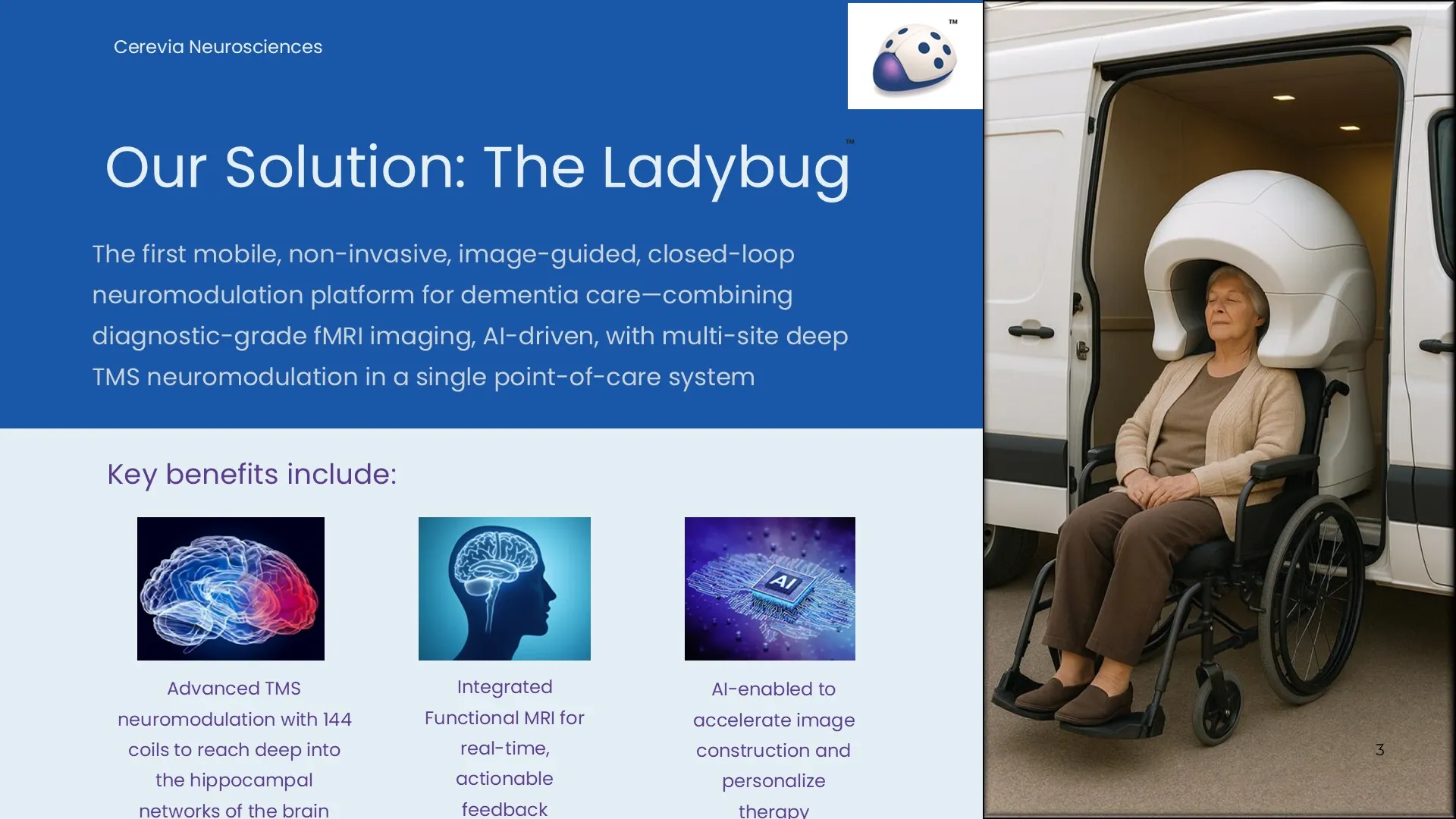
The client shared an existing investor deck built around strong scientific content and real clinical data. The core thesis was credible. But the design was working against it. Bold colors and inconsistent typography made the slides feel overwhelming rather than sophisticated, the product itself was not highlighted enough, and content-heavy slides like the problem, market, and financial projections had no visual cues to guide investors through the messaging. A go-to-market slide was missing entirely.

Pain-Points

Text heavy

No Visual Hierarchy

Flat Visuals

Unstructured Narrative
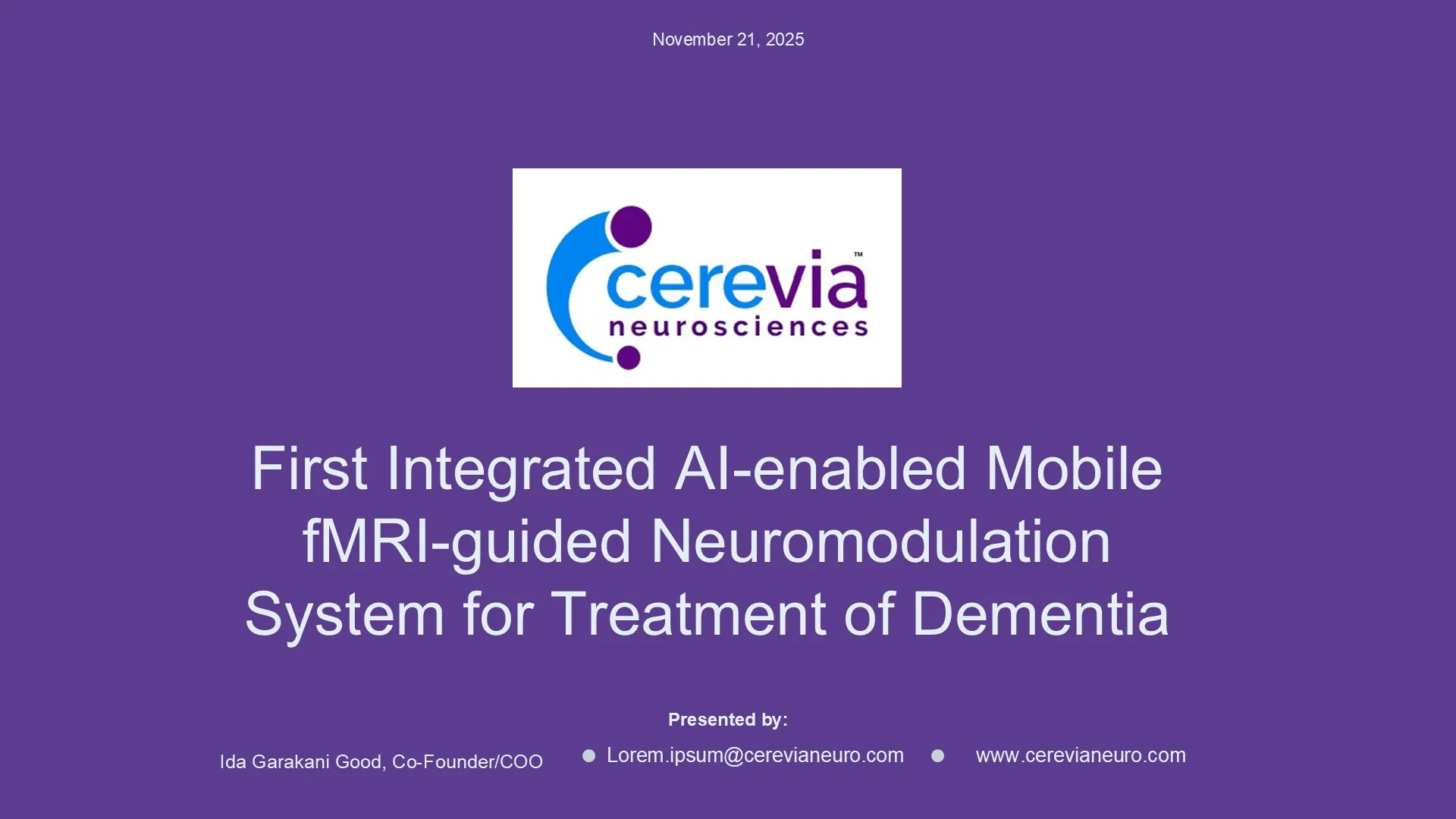
Before version of a Series A pitch deck cover slide for a neuroscience startup, showing a text-heavy healthcare investor presentation focused on blood–brain barrier drug delivery.Before company overview slide from a neuroscience Series A investor deck, featuring dense text blocks and limited visual hierarchy explaining a CNS drug delivery platformBefore problem slide in a neuroscience pitch deck, using text-heavy explanations and basic diagrams to describe blood–brain barrier challenges in CNS therapeuticsBefore slide from a neuroscience Series A pitch deck explaining the blood–brain barrier using dense text and conceptual framing without a clear investor-oriented visual hierarchy.Before core insight slide in a CNS therapeutics investor deck, combining text-heavy explanations and a basic scientific diagram to describe controlled access across the blood–brain barrier.Before platform overview slide from a neuroscience startup pitch deck, presenting a carrier-based brain delivery concept with minimal visual simplification and limited storytelling structure.
STEP 1

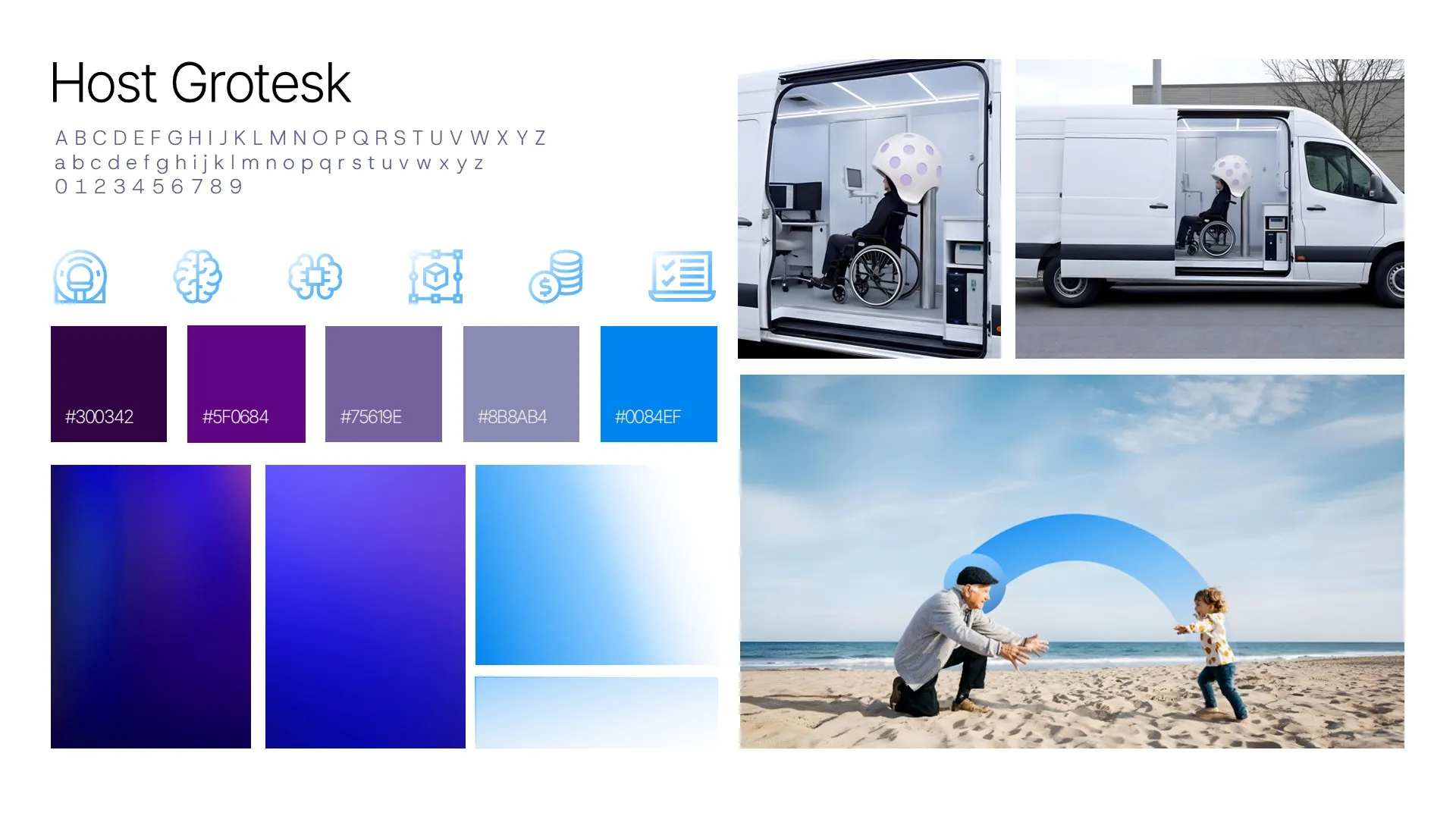
Moodboard & Brand Assets

We started by building a presentation design system from scratch. Deep blue and purple gradients formed the visual foundation. Typography was set in Host Grotesk for clarity at all sizes. Color usage was disciplined across slide types, with darker treatments for data-heavy slides and lighter layouts for narrative sections. Icons and layout grids were standardized across every slide to replace the inconsistent fonts and bold-color overuse with a calmer, more sophisticated visual identity.
Before core insight slide in a CNS therapeutics investor deck, combining text-heavy explanations and a basic scientific diagram to describe controlled access across the blood–brain barrier.
STEP 2

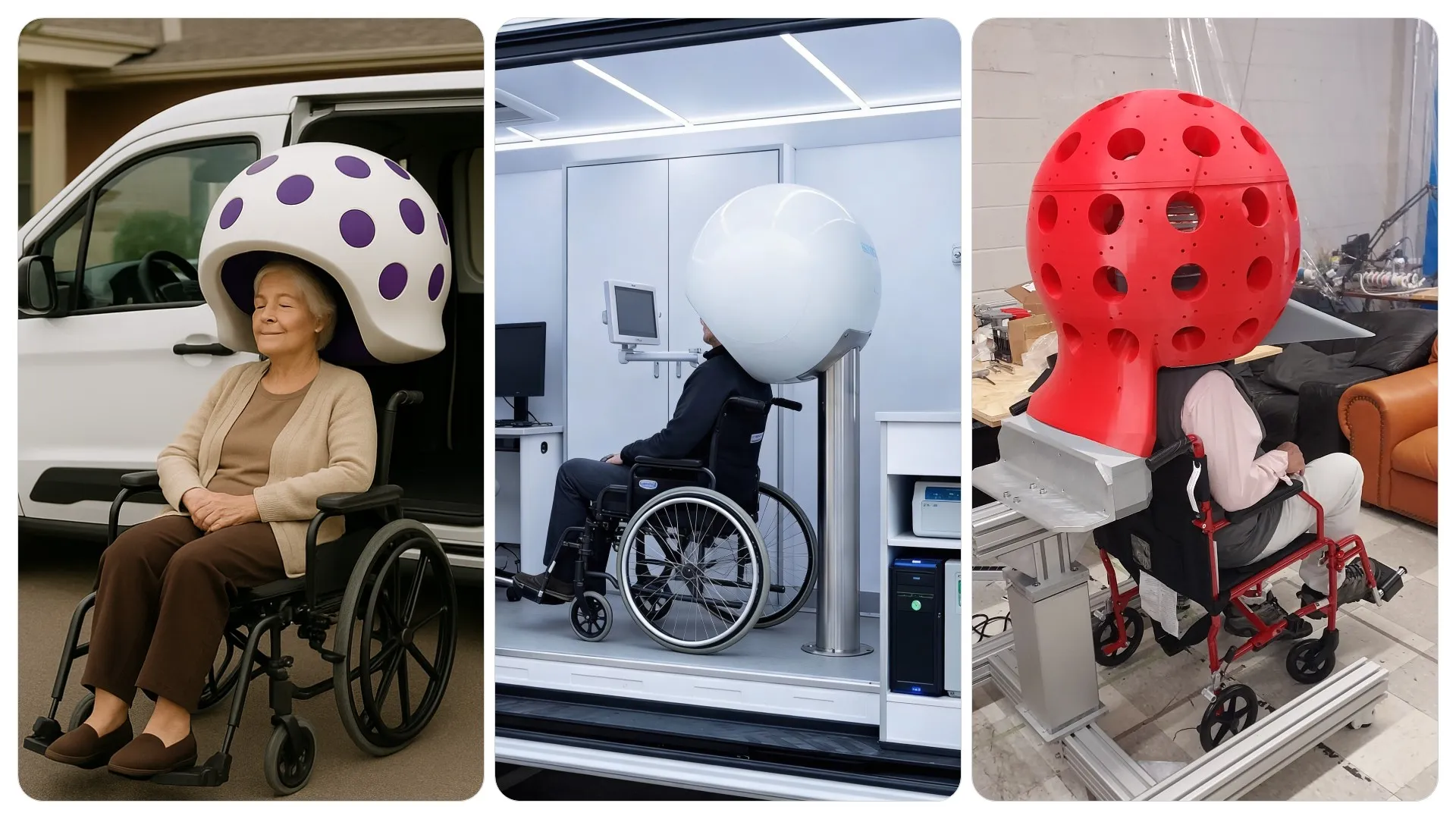
Generating On-Brand AI Imagery

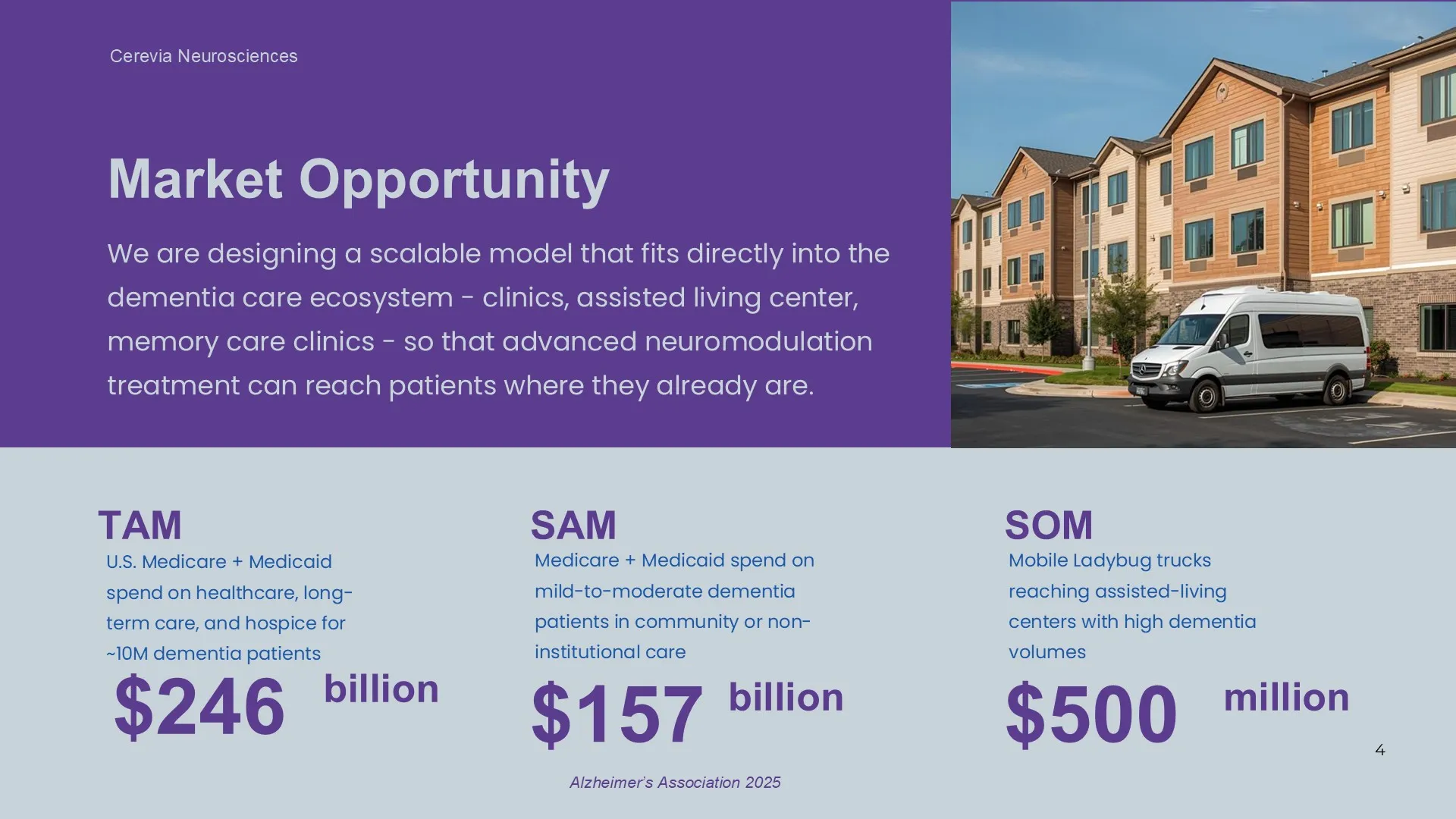
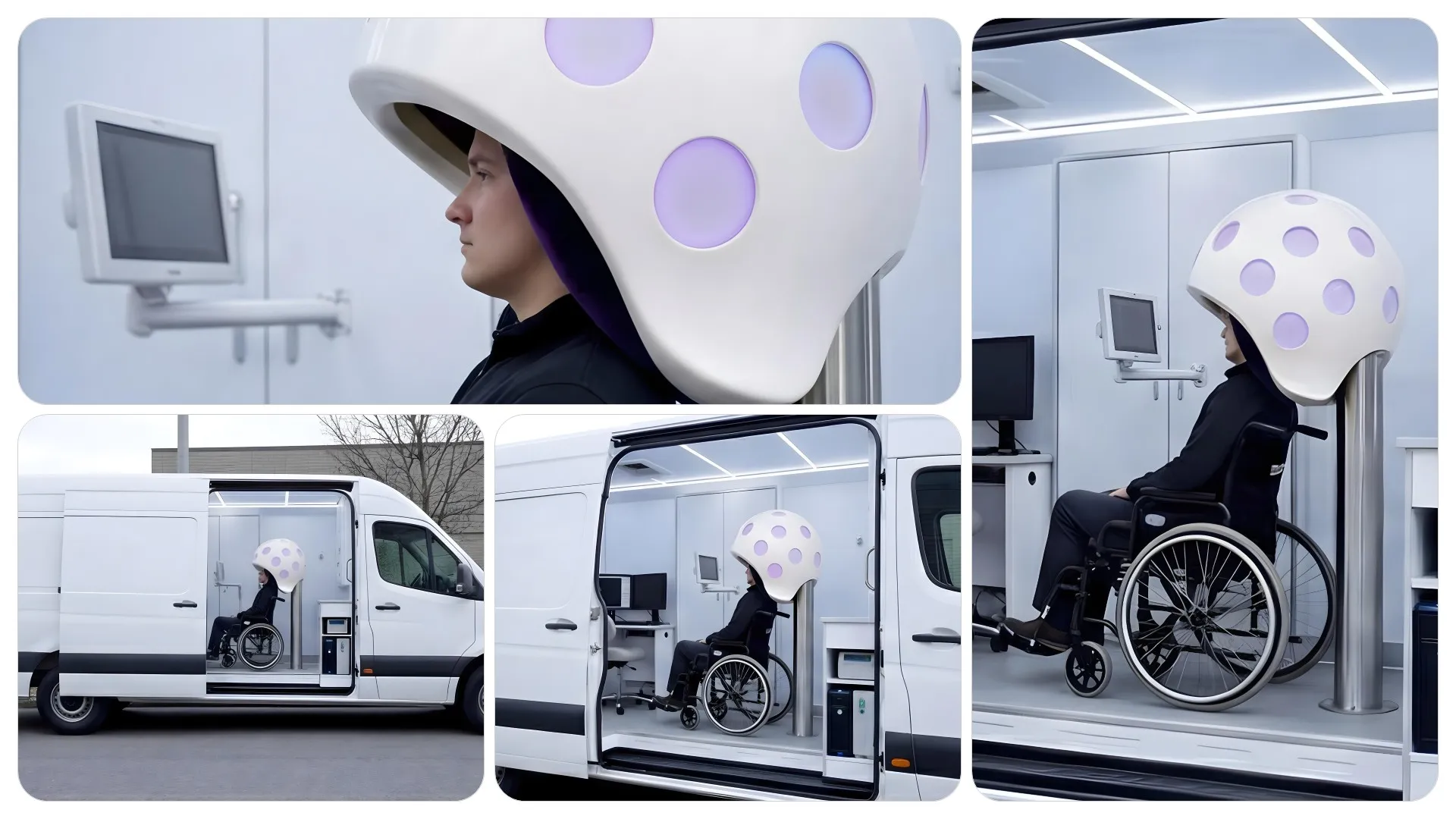
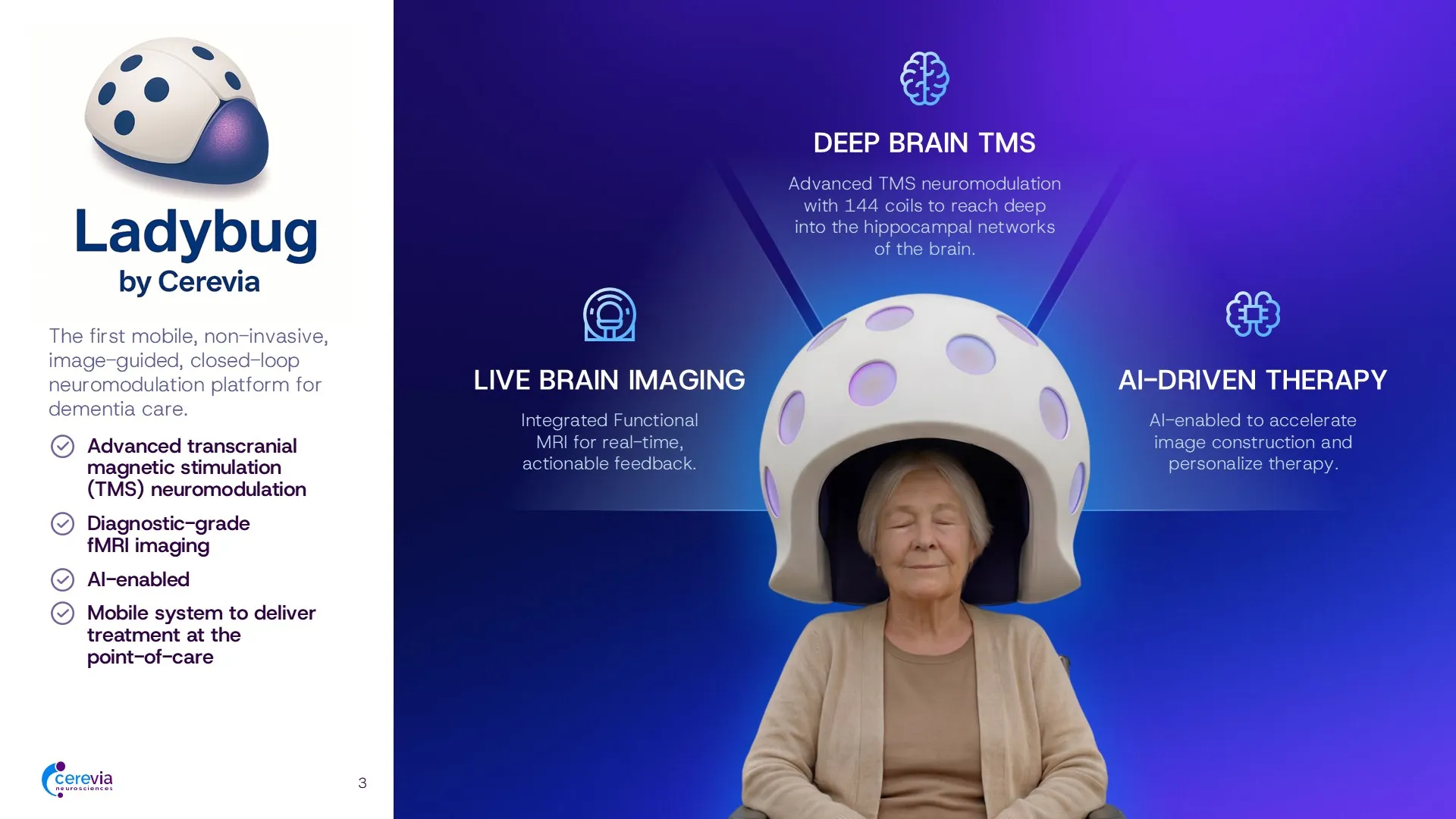
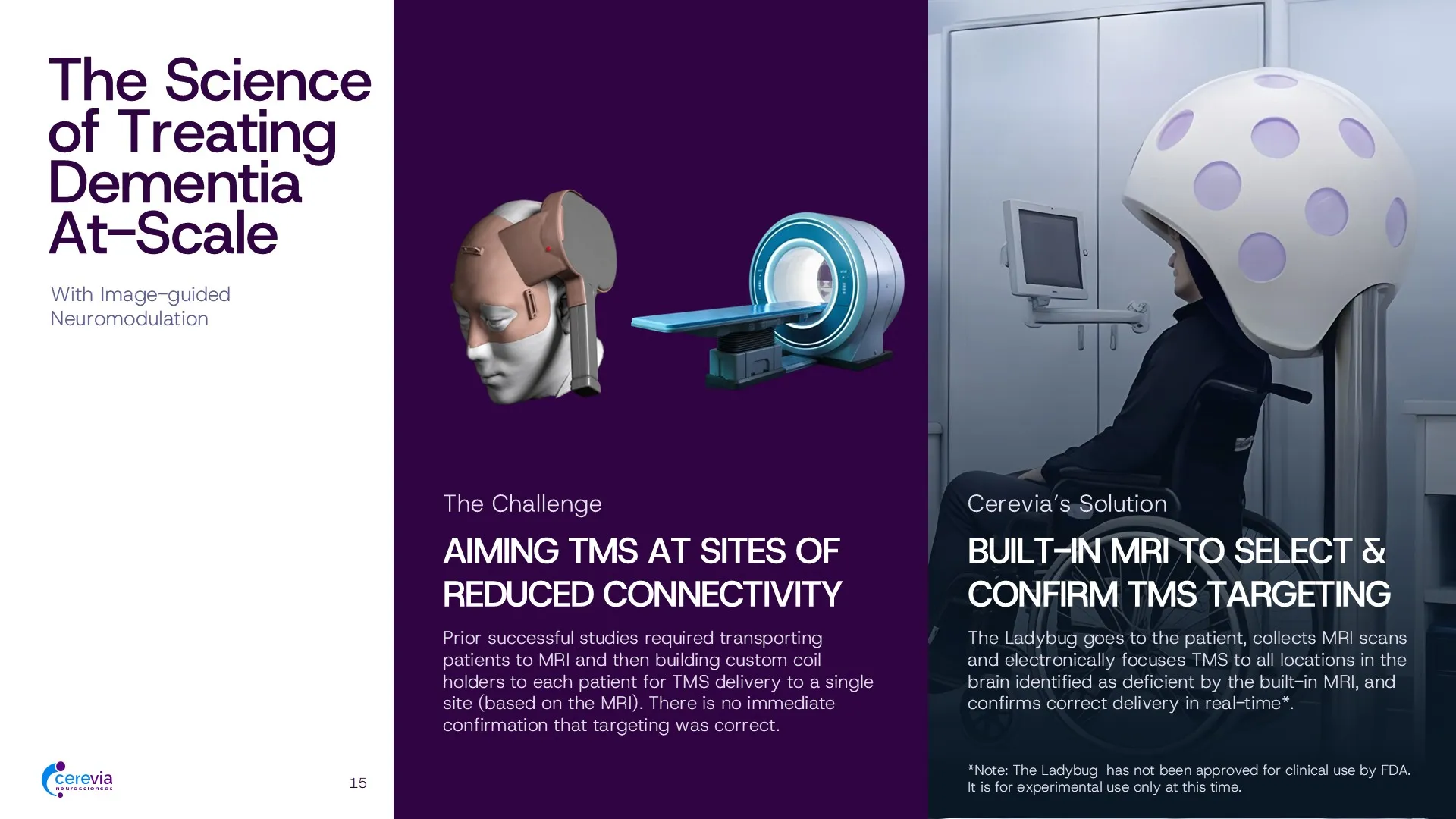
The original deck used early-concept renders that made the Ladybug look speculative. We used generative AI to produce a full set of realistic, patient-facing scenarios showing the device in clinical settings, inside the mobile treatment van, and in assisted living environments. Each image was refined to feel grounded and human, replacing concept visuals with imagery that finally gave the product the visibility it deserved across the deck.
Before core insight slide in a CNS therapeutics investor deck, combining text-heavy explanations and a basic scientific diagram to describe controlled access across the blood–brain barrier.
STEP 3

Transforming Key Slides

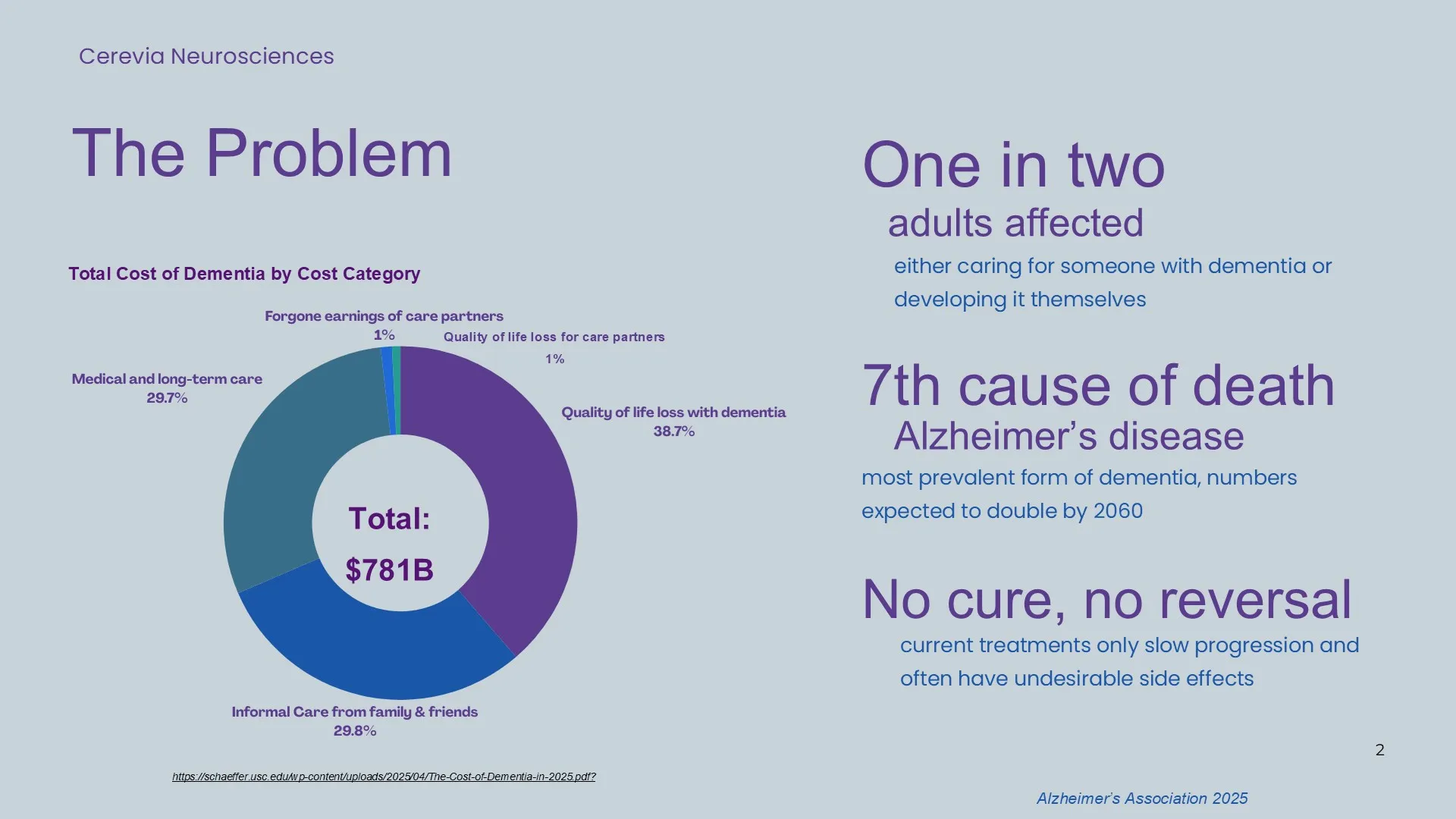
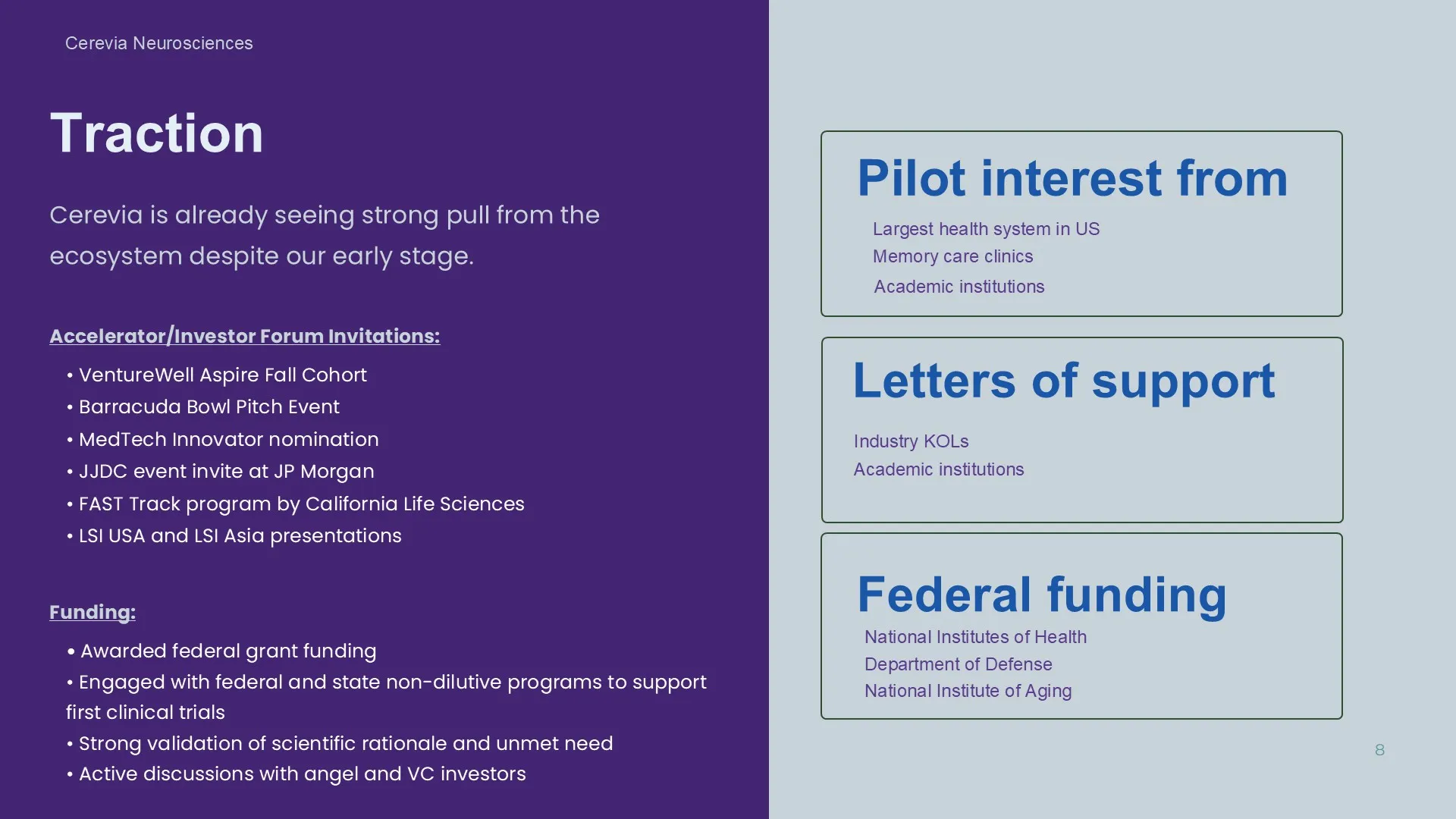
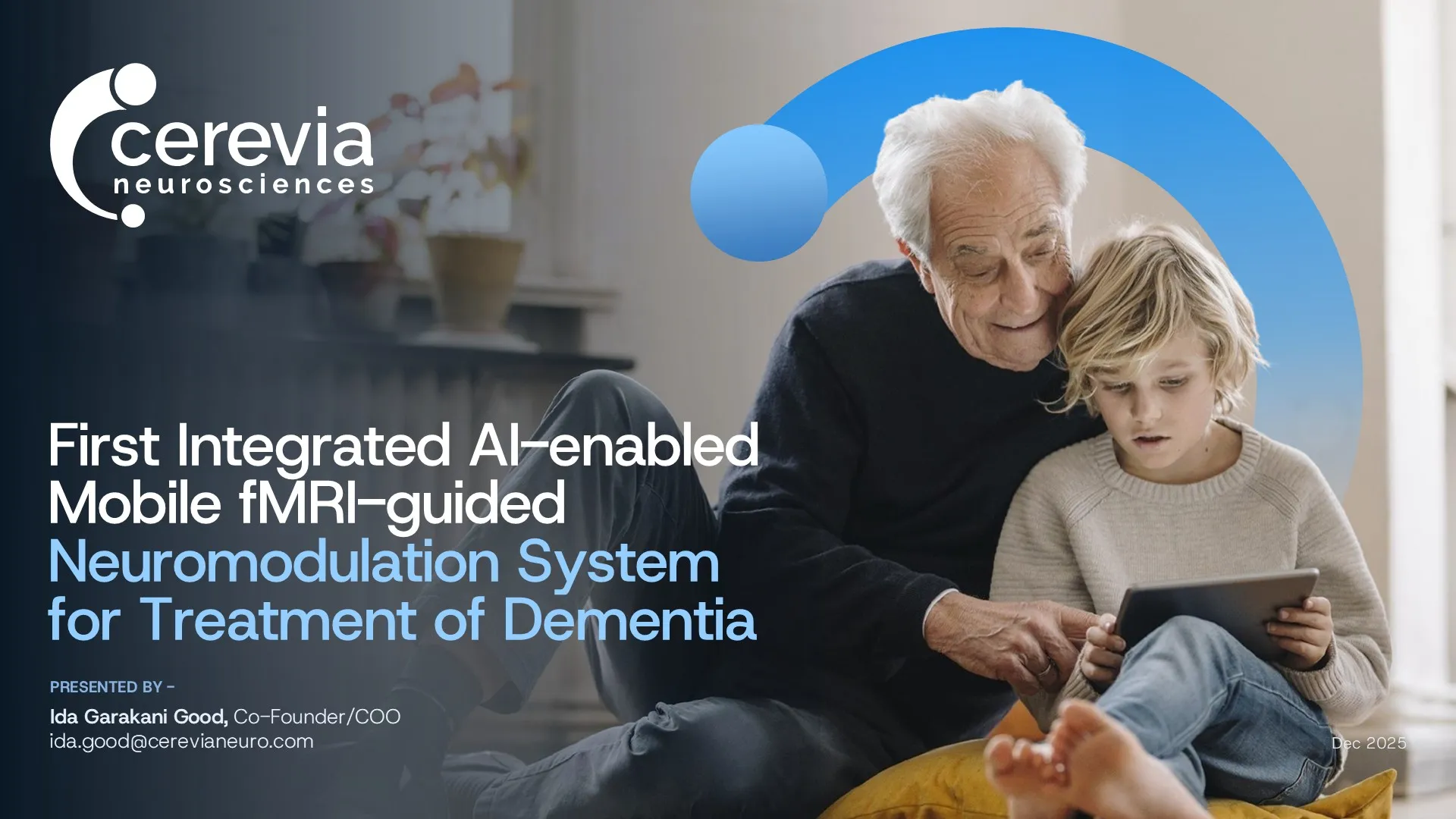
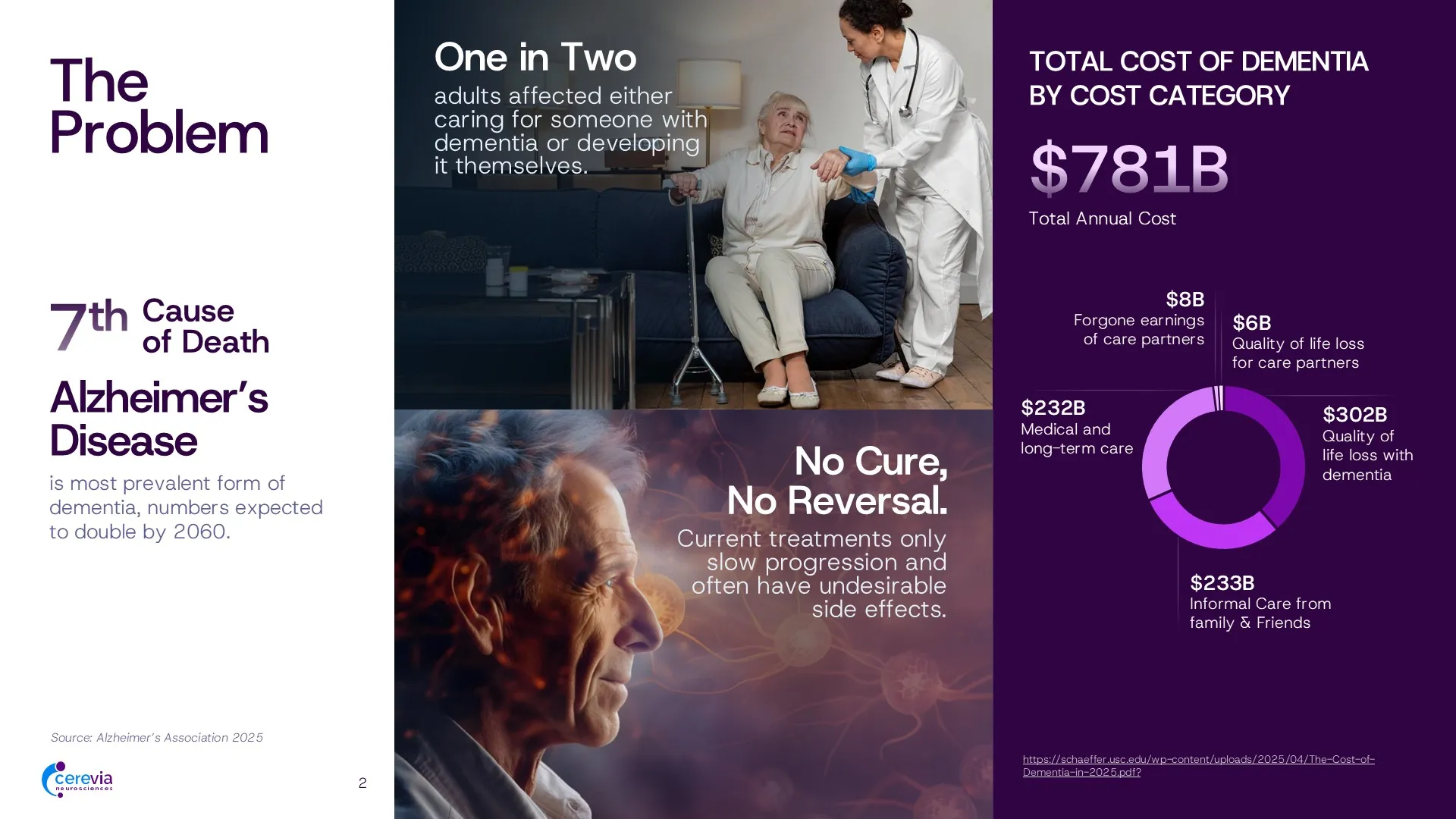
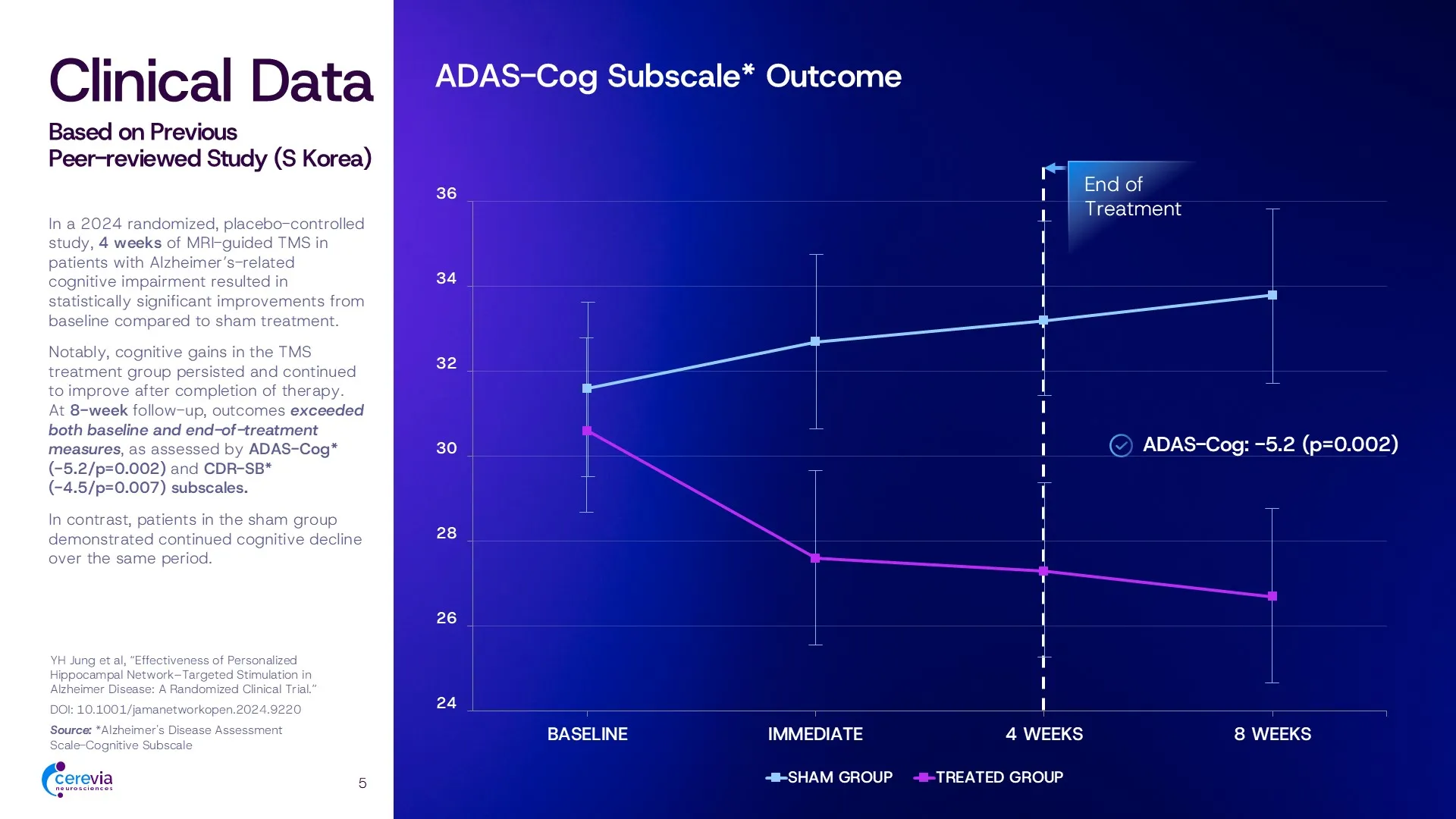
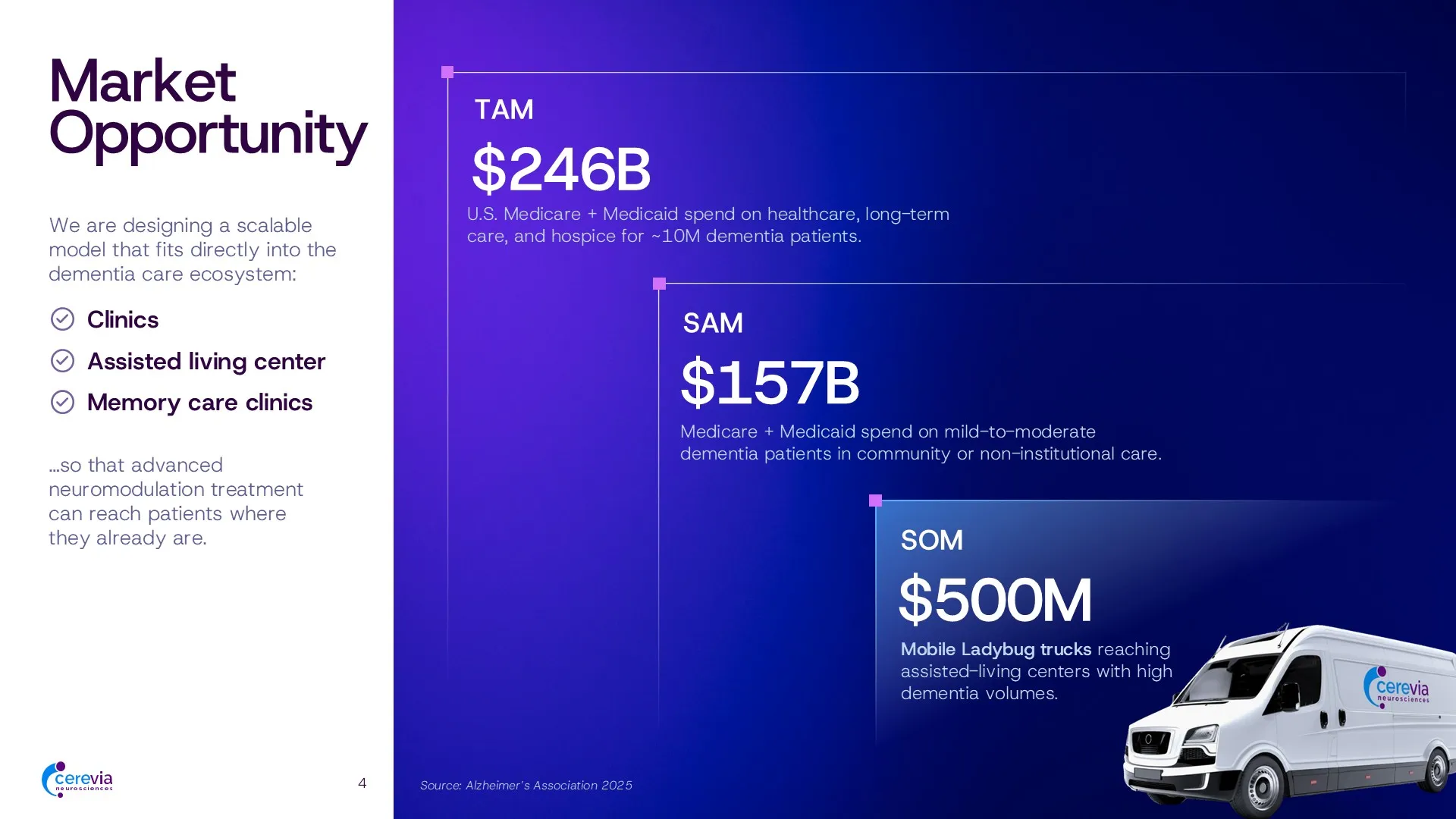
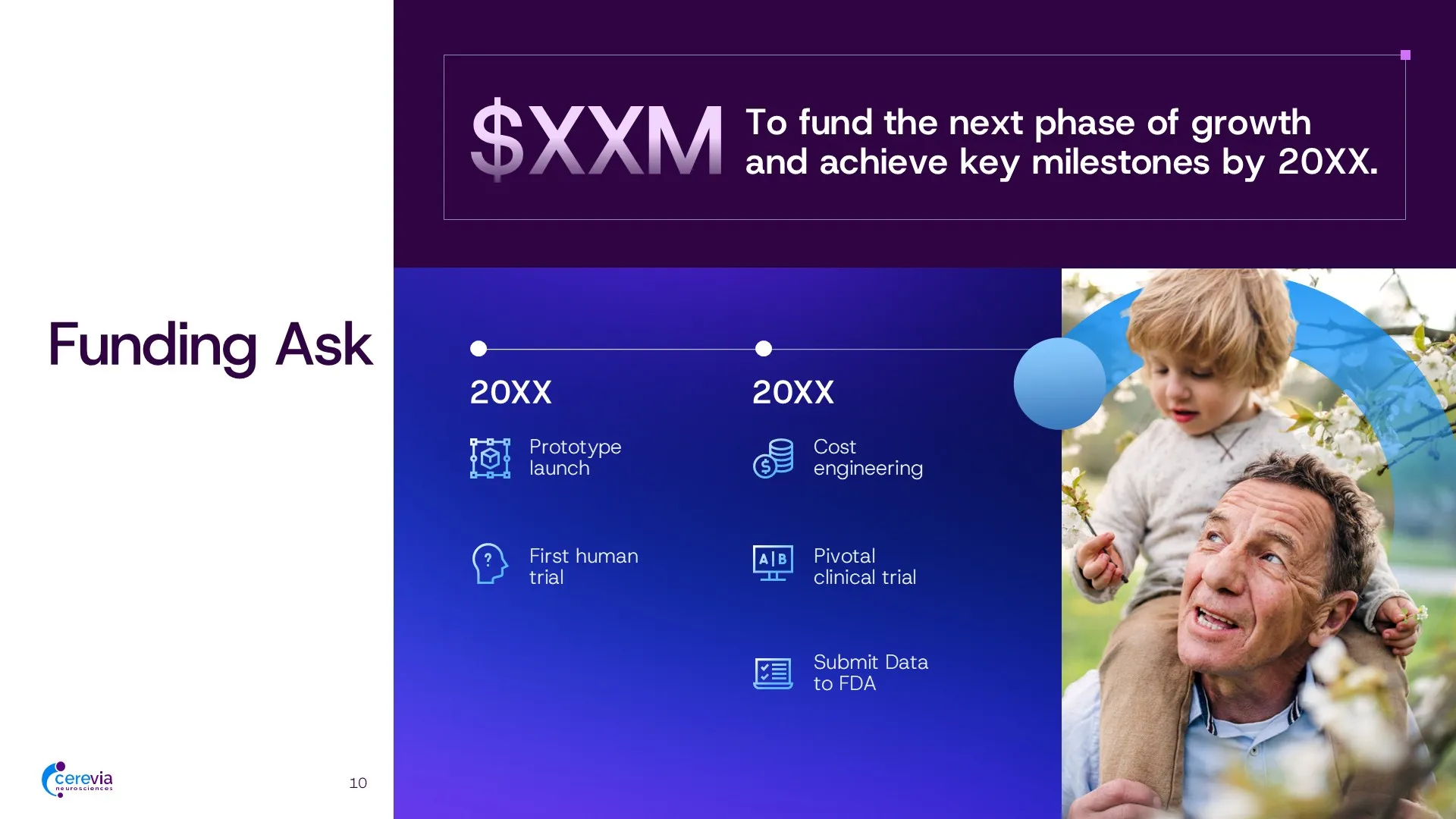
We rebuilt the slides that were doing the most work in the investor conversation. The cover was redesigned with stronger imagery to set the right tone. The problem slide was reworked from a text-heavy data dump into a cleaner, visual representation of dementia's impact. We also added the missing go-to-market slide and tightened the competitive landscape and traction copy to remove what was not earning its place.

Improvements

Clear Hierarchy

Simplified technicalities

Strong Storytelling

Data Visualization

Redesigned Series A pitch deck cover slide for a neuroscience startup, featuring a clear headline, refined visual hierarchy, and investor-ready illustration of CNS drug delivery across the blood–brain barrier.
Final Series A investor presentation cover for a CNS therapeutics company, showcasing simplified visuals and a clear narrative for a healthcare fundraising deck.
Redesigned problem slide in a neuroscience Series A pitch deck, visually explaining why most neuro drugs fail to reach the brain using simplified diagrams and investor-focused messaging.
Investor-ready problem framing slide from a healthcare pitch deck, highlighting CNS clinical failure rates and blood–brain barrier constraints through clear data visualization and storytelling.
Redesigned core insight slide in a neuroscience Series A pitch deck, clearly explaining why controlled access across the blood–brain barrier matters more than stronger CNS drugs.
Investor-ready core insight slide from a healthcare pitch deck, using a simplified blood–brain barrier illustration to explain controlled CNS drug transport.
Redesigned platform overview slide in a neuroscience startup pitch deck, introducing a carrier-based escort platform for brain drug delivery with clear visual sequencing.
Healthcare Series A investor slide visualizing a carrier-based brain delivery mechanism step by step, showing how therapeutics cross the blood–brain barrier safely.
Redesigned economic leverage slide in a CNS therapeutics pitch deck, explaining how internal programs and partner assets combine within a unified delivery platform
Circular grid pattern composed of thin white intersecting lines on a black background.
AFTER

Final Series A Pitch Deck

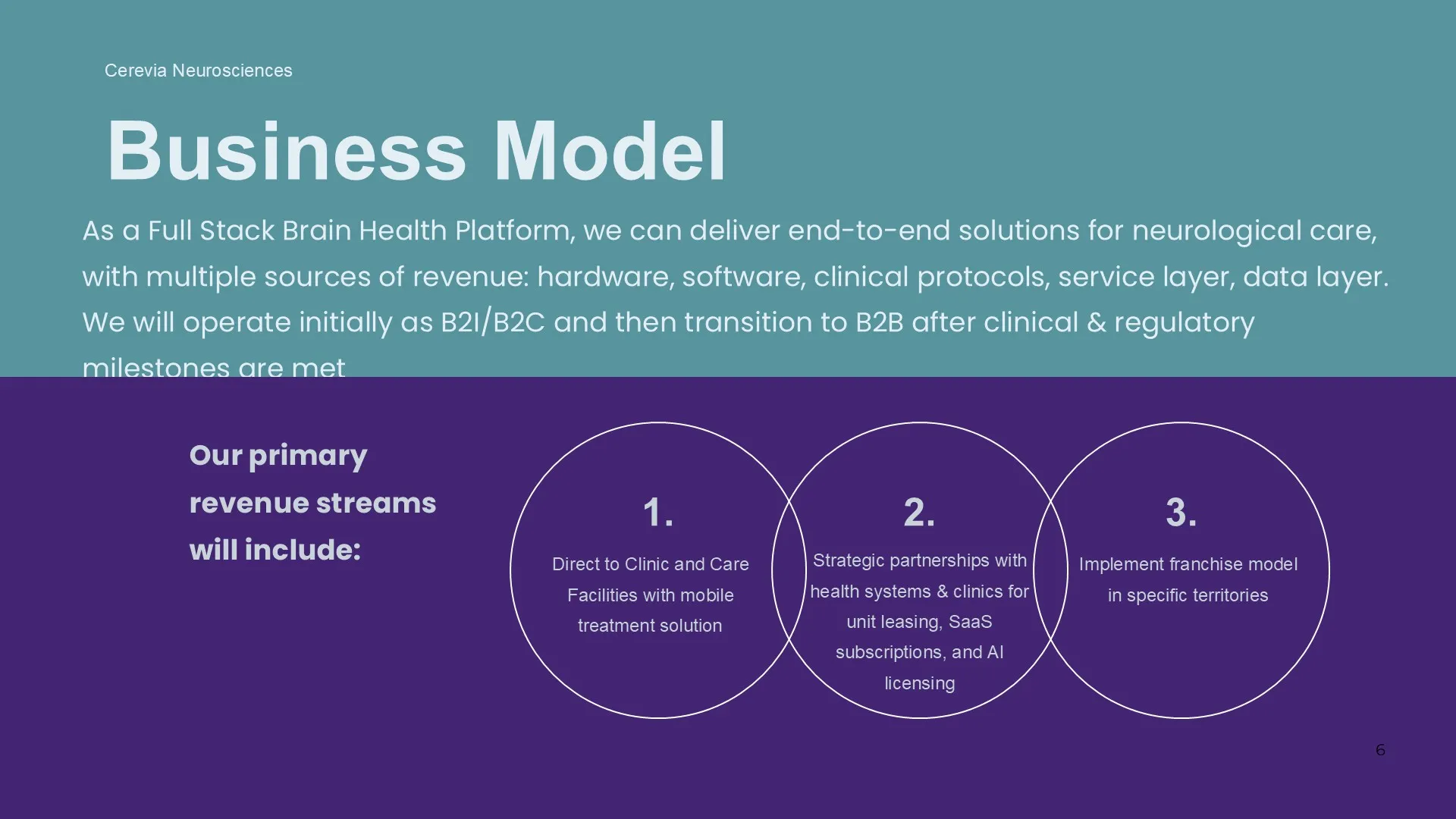
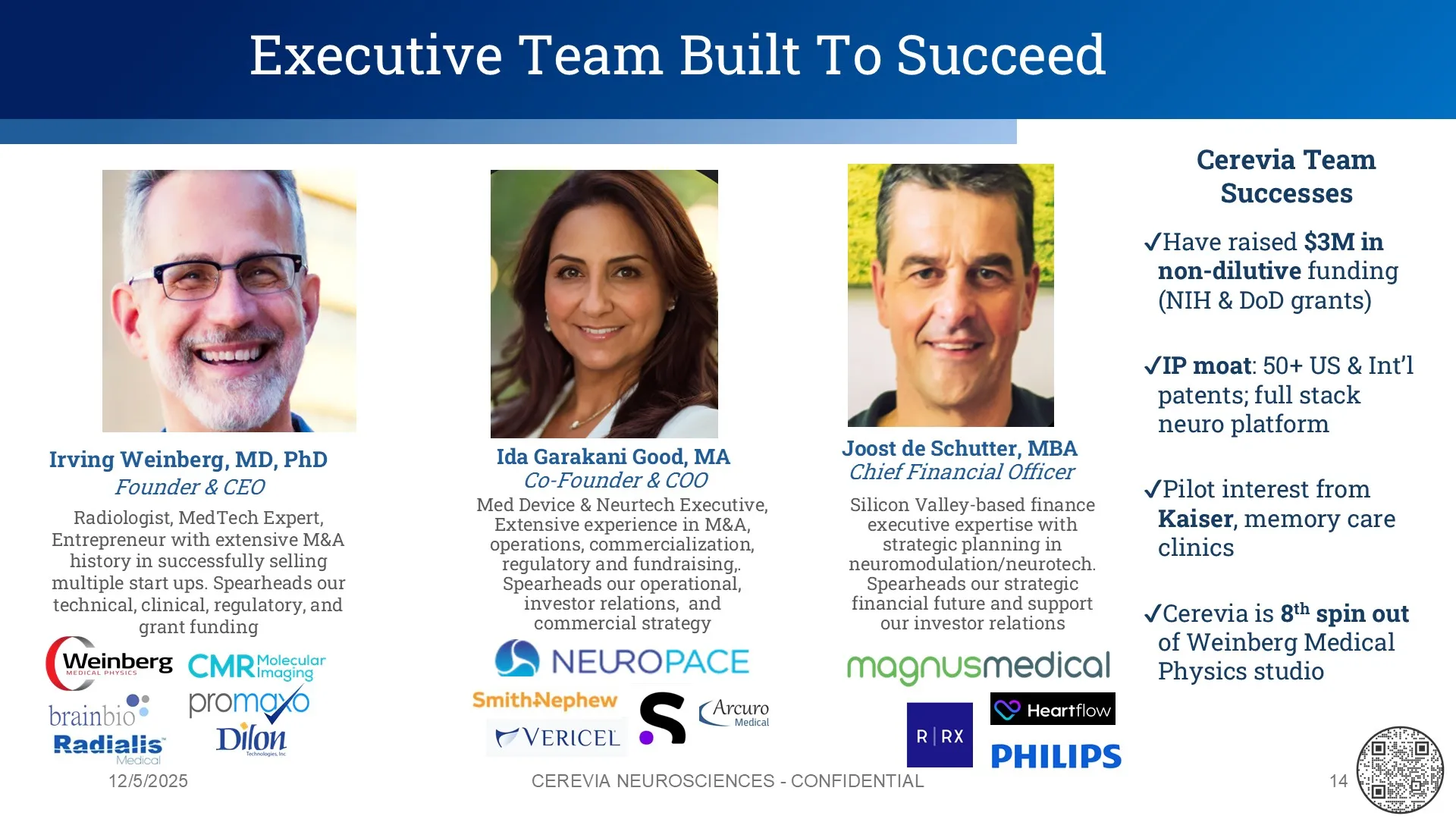
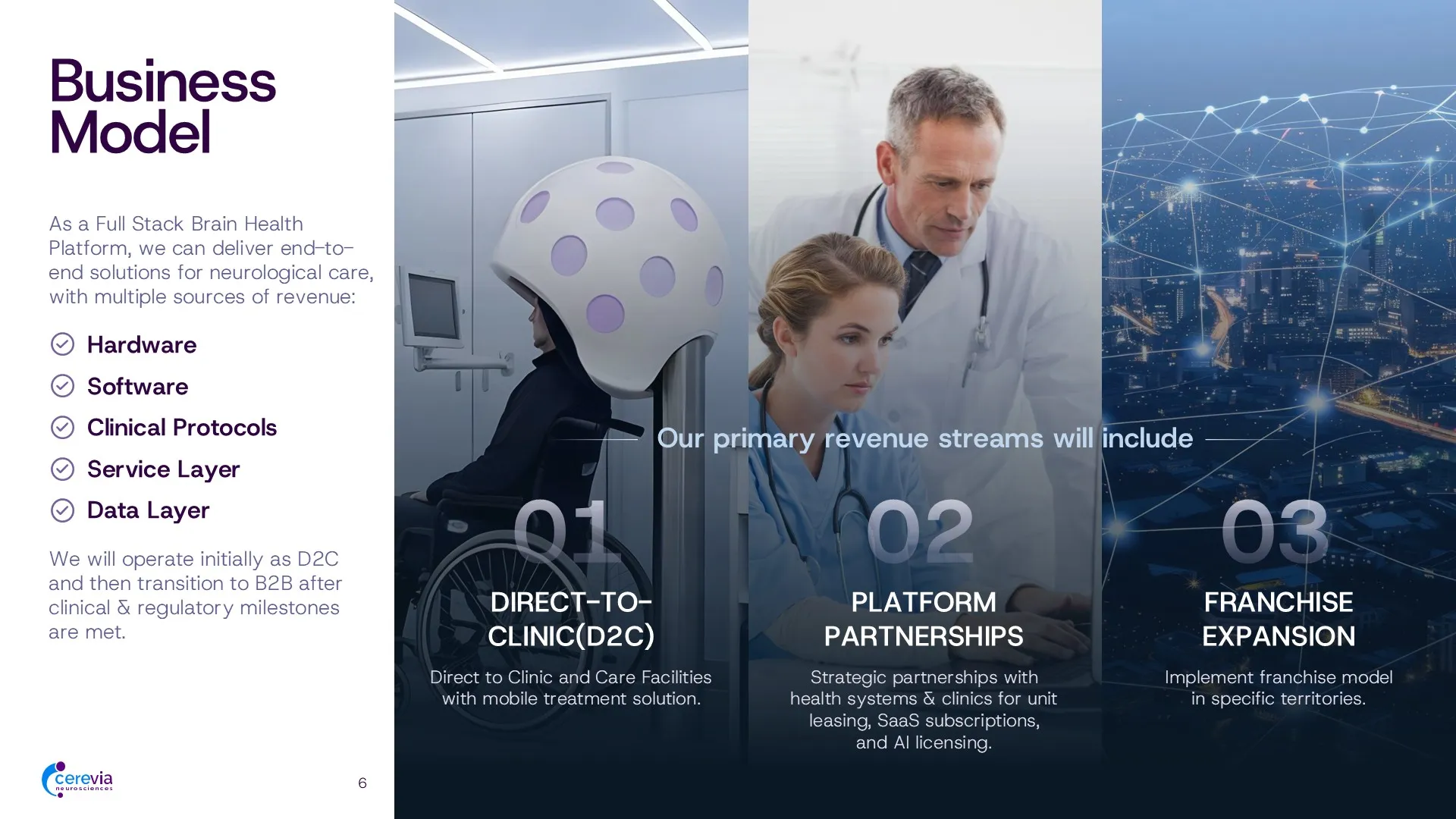
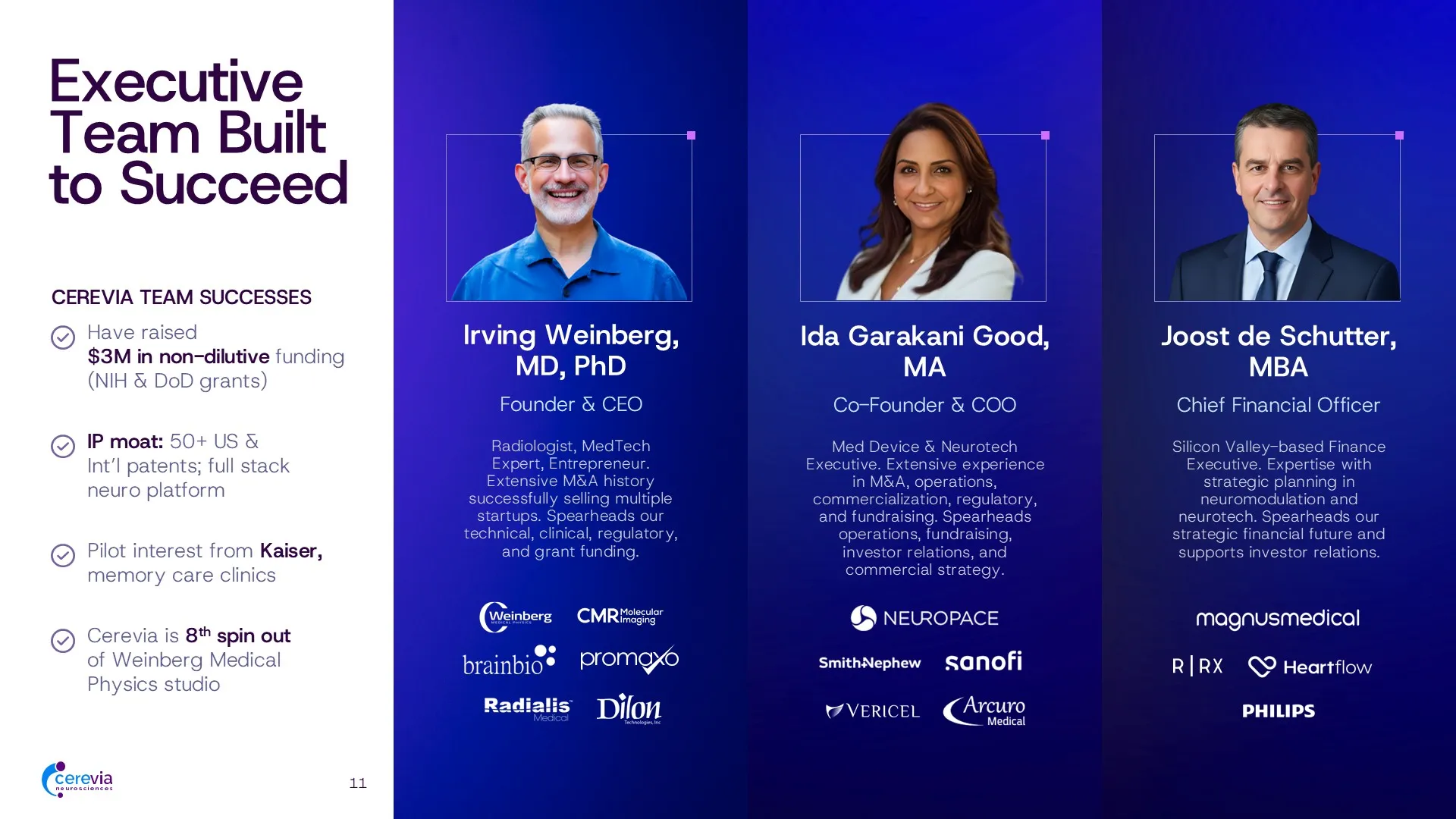
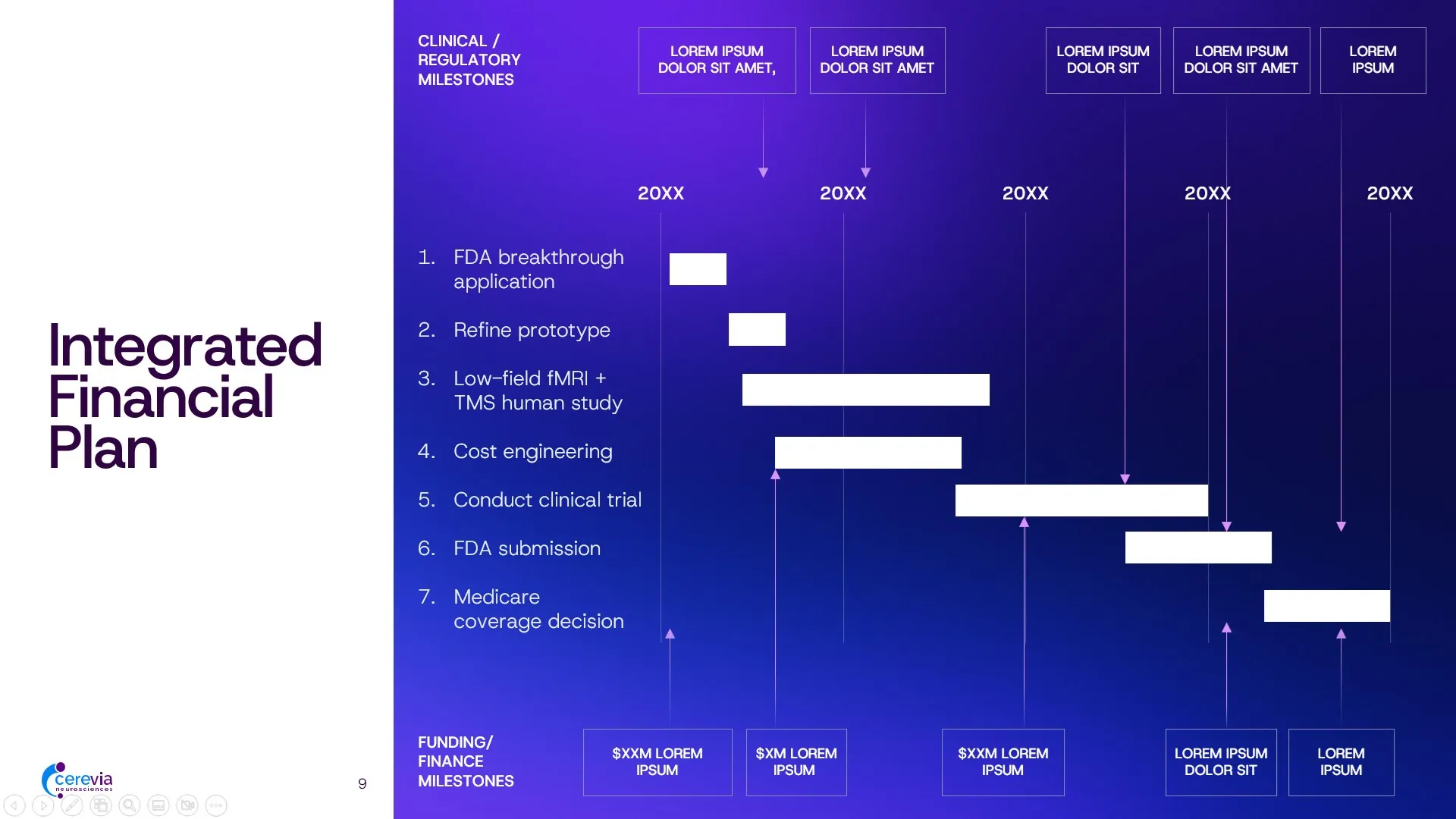
The final Series A pitch deck clearly positions Cerevia as a differentiated mobile neuromodulation platform for dementia care. The deck presents complex neurotechnology in a way that is easy to follow, visually engaging, and investor-ready. The result is a clear and professional medical pitch deck that supports fundraising conversations, improves investor confidence, and enables faster decision-making.
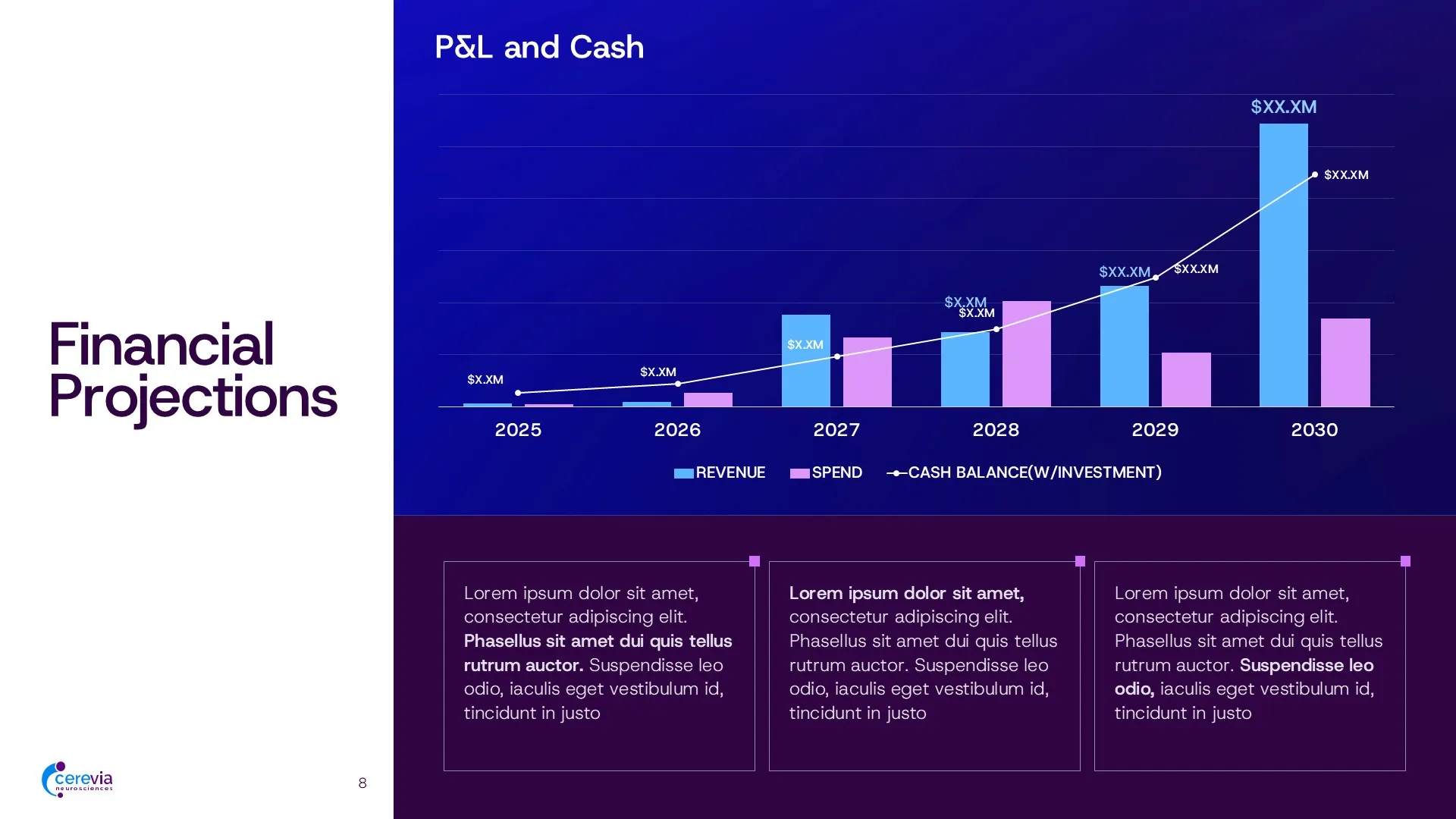
Final Series A pitch deck cover for a neuroscience startup, presenting a CNS drug delivery platform designed to enable precise delivery across the blood–brain barrier for investorsFinal company overview slide from a neuroscience Series A investor presentation, summarizing platform differentiation, CNS focus, and drug delivery capabilities in a clear, investor-friendly layout.Final problem slide in a healthcare Series A pitch deck, highlighting high clinical failure rates in CNS drug development caused by blood–brain barrier constraintsFinal explanatory slide from a neuroscience investor deck, visually illustrating how the blood–brain barrier acts as a selective gatekeeper in CNS therapeutics deliveryFinal core insight slide from a neuroscience Series A pitch deck, explaining that controlled access across the blood–brain barrier is more critical than stronger CNS drugs for successful deliveryHealthcare investor presentation slide highlighting a large underserved neurotherapeutics market, showing global CNS market size and delivery-limited opportunity for neuroscience startupsFinal platform mechanism slide in a neuroscience Series A deck, visually explaining a carrier-based escort system that enables safe drug delivery across the blood–brain barrierFinal team slide from a neuroscience investor pitch deck, presenting leadership expertise across CNS research, clinical development, and drug delivery executionFinal economic leverage slide from a neuroscience Series A pitch deck, illustrating a hybrid model combining internal CNS programs and partner assets powered by a shared drug delivery platformHealthcare investor slide comparing delivery-limited neuro drugs with controlled brain access, demonstrating improved clinical potential through validated blood–brain barrier transportFinal pipeline slide in a neuroscience Series A investor presentation, outlining a delivery-first CNS development pipeline across discovery, preclinical, and clinical stagesFinal milestones slide from a healthcare pitch deck, showing clear 24–36 month validation points for blood–brain barrier transport and CNS platform expansion